
California faces persistent water challenges that demand innovative conservation strategies. From recurring drought conditions to increasing population demand on finite water resources, homeowners and businesses must adopt sustainable practices that reduce consumption without compromising quality of life.
Eco-friendly plumbing upgrades offer practical, measurable solutions for addressing water scarcity. These technologies and systems can deliver substantial conservation benefits while providing long-term financial savings through reduced utility costs. Modern water-saving fixtures and appliances perform as effectively, or better, than traditional alternatives, making conservation both accessible and practical for California households.
At Trumbull Plumbing, we specialize in implementing water-conservation solutions tailored to California’s environment. Our expertise helps homeowners understand available technologies and choose upgrades that maximize water savings while meeting household needs and budget considerations.
1) Low-Flow Fixtures
Low-flow faucets and showerheads employ aerator technology that maintains water pressure while reducing flow rates. Traditional showerheads deliver 2.5 gallons per minute or more, whereas modern low-flow alternatives use 2.0 gallons per minute or less, achieving up to 20% water reduction without a noticeable degradation in performance.
WaterSense-labeled fixtures meet Environmental Protection Agency efficiency standards, guaranteeing performance alongside conservation. These fixtures incorporate pressure-compensating mechanisms and optimized spray patterns that provide satisfying water delivery while consuming much less water.
For typical California households, replacing standard fixtures with low-flow alternatives saves thousands of gallons annually. A family of 4 showering daily can conserve approximately 2,900 gallons yearly per bathroom through showerhead upgrades alone. Kitchen and bathroom faucet replacements contribute additional savings, collectively reducing household water consumption by 10 to 15% through fixture upgrades.
2) High-Efficiency Toilets
Traditional toilets manufactured before 1994 consume 3.5 to 7 gallons per flush, translating to substantial needless water waste. Federal standards now limit new toilets to 1.6 gallons per flush, while high-efficiency models achieve even greater conservation. WaterSense-certified high-efficiency toilets use 1.28 gallons per flush or less, roughly 20% less than standard federal requirements. Dual-flush models provide additional flexibility, offering reduced-volume flushes for liquid waste (typically 0.8 gallons) and full flushes for solid waste.
The average person flushes 5 times daily, which makes 1,825 annual flushes. Replacing a 3.5-gallon toilet with a 1.28-gallon high-efficiency model saves roughly 4,000 gallons per person yearly. For California households paying typical water rates, this reduction generates a $50 to $80 annual saving per person, offsetting fixture costs within a few years while providing ongoing financial benefits.
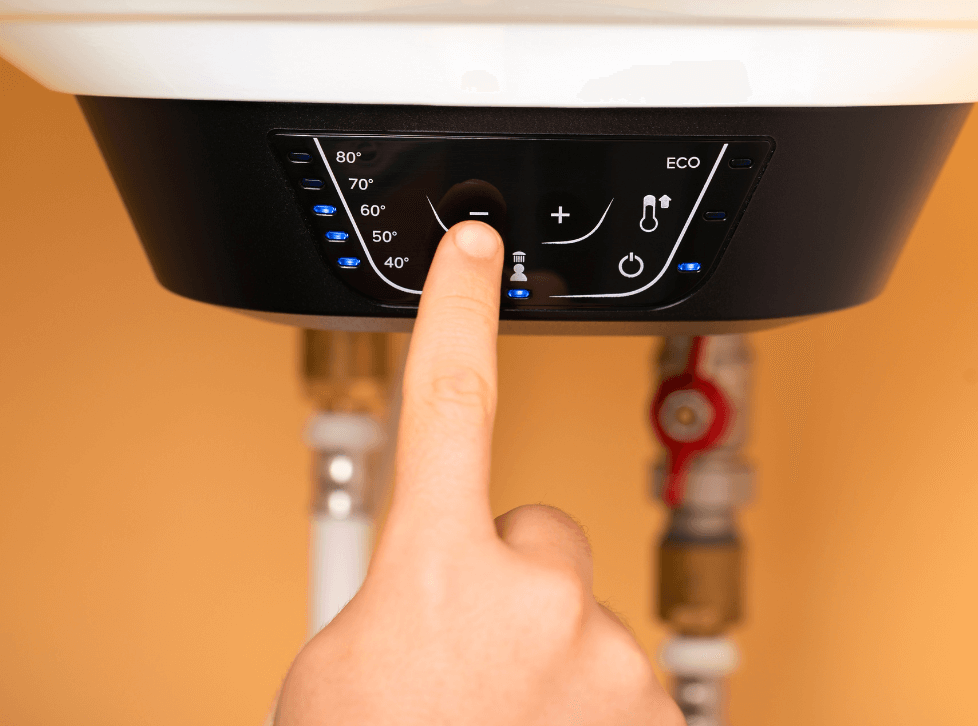
3) Tankless Water Heaters
Traditional tank water heaters maintain large volumes of heated water continuously, consuming energy even when hot water isn’t needed. This standby heat loss wastes both energy and water, as people often run taps longer waiting for hot water to reach distant fixtures.
Tankless systems heat water instantaneously as it flows through the unit, eliminating standby losses. These systems provide endless hot water while reducing energy consumption by 24 to 34% for households using 41 gallons or less of hot water daily, typical for many California homes.
California’s moderate climate reduces heating demands, maximizing the efficiency advantages of tankless water heaters. Variable household water demands, from morning showers and evening dishes to periodic laundry, align well with on-demand heating capabilities, ensuring the availability of hot water without maintaining heated reserves.
Beyond this, the compact footprints of tankless units suit California’s space-conscious housing, especially in urban areas where square footage commands premium value.
4) Leak Detection and Repair Systems
Hidden leaks squander water insidiously, with even small drips wasting thousands of gallons annually. A faucet dripping once per second wastes over 3,000 gallons yearly, while toilet leaks can waste 200 gallons daily, or 73,000 gallons annually per faulty toilet.
Modern smart leak detection systems employ sensors throughout plumbing infrastructure, monitoring flow patterns, and identifying anomalies indicating leaks. These systems alert homeowners via smartphone notification, enabling immediate intervention before minor leaks cause extensive waste or property damage.
Whole-home water monitoring tracks consumption patterns, revealing unusual usage that suggests hidden leaks or inefficient fixtures requiring attention. This data-driven approach transforms leak detection from reactive crisis management to proactive conservation strategy.
5) Greywater and Rainwater Systems: Resource Reuse
Greywater, which is relatively clean wastewater from sinks, showers, and washing machines, accounts for 50 to 80% of residential wastewater. California regulations permit greywater reuse for landscape irrigation when properly managed, recycling this resource rather than sending it to treatment facilities.
Simple greywater systems divert laundry water directly to landscaping with minimal plumbing modification. More sophisticated systems incorporate filtration and distribution networks serving entire yards, substantially reducing potable water demands for outdoor use.
Although California’s rainfall concentrates seasonally, capturing and storing rainwater provides supplemental irrigation supplies. Rain barrels collect rooftop runoff, storing hundreds of gallons for dry-season landscape watering. Larger cistern systems accommodate thousands of gallons, supporting extensive areas through prolonged drought periods.
These systems reduce municipal water demands while managing stormwater runoff that otherwise contributes to urban flooding and pollution.
6) Efficient Irrigation and Outdoor Plumbing
Traditional spray irrigation wastes lots of water through evaporation and overspray. Drip irrigation systems deliver water directly to plant root zones through low-pressure emitters, achieving 90% efficiency compared to 65 to 75% for conventional sprinklers.
Weather-based irrigation controllers adjust watering schedules based on temperature, humidity, precipitation, and seasonal patterns. These systems eliminate irrigation during rainfall, reduce watering during cool periods, and increase delivery during heat waves, optimizing plant health while minimizing waste.
The implementation of smart water technology can generate 20 to 50% outdoor water savings. Implementation is the largest conservation opportunity in California, given that outdoor use constitutes 50 to 70% of household water consumption in the Golden State.
7) Benefits Beyond Water Savings
Water-efficient upgrades reduce utility bills immediately and permanently. California’s tiered water pricing, where rates increase with consumption, amplifies savings for conservation-focused households. Reduced water heating demands from efficient fixtures and tankless heaters compound savings through decreased energy costs.
Every gallon conserved reduces energy consumption for water treatment, distribution, and heating, lowering greenhouse gas emissions. Decreased wastewater generation lessens the burden on treatment facilities, protecting aquatic ecosystems from the impact of discharge.
Eco-friendly upgrades appeal to environmentally-conscious buyers while showcasing the modernity and efficiency of the home system. California’s sustainability-minded market particularly values water conservation features, turning upgrades into competitive advantages during property sales.
Choosing Trumbull Plumbing for Eco-Friendly Upgrades
Our expertise in water-efficient technologies informs optimal system selection and installation for your circumstances. We assess household water usage patterns, identify conservation opportunities, and implement solutions to maximize savings while respecting budgetary parameters.
California’s regulatory framework and rebate programs can be complex, so we provide guidance securing available incentives, offsetting upgrade costs through utility rebates and tax credits.Schedule your eco-friendly plumbing consultation today by calling Trumbull Plumbing at (949) 466-8617.